When most people think of AI apps, their minds likely jump to the giants of the industry. Tools like ChatGPT for writing or Taskade—described by one user as “Notion on steroids for project management with team collaboration”—have become household names, defining the public perception of what artificial intelligence can do. But while these powerful platforms grab the headlines, a quieter and perhaps more interesting revolution is underway.
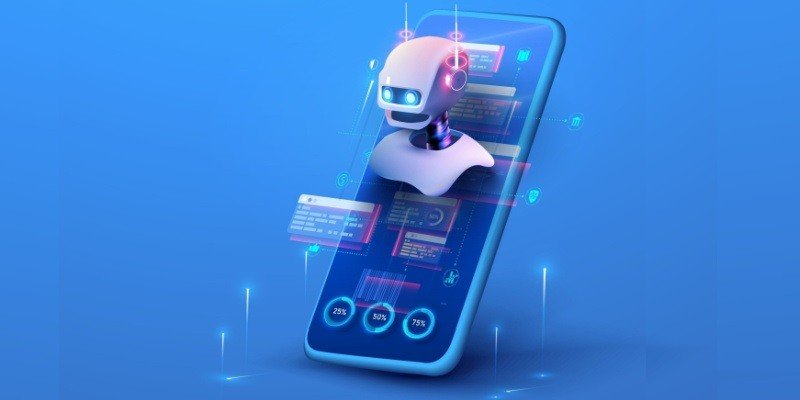
But the real story isn’t happening in the cloud; it’s happening in our pockets, where a new breed of specialized AI is quietly becoming part of our personal lives. These tools are moving beyond simple task automation to become coaches, confidants, and creative partners. This post will uncover five surprising trends that show how AI is becoming more personal and impactful in ways you might not expect.
1. Your Next Coach Is an AI
The concept of a personal coach—once a luxury reserved for top executives and athletes—is being democratized by AI. This trend marks a fundamental shift from AI as a passive information-provider to an active, Socratic partner in our growth. Instead of just answering our questions, these apps are starting to ask them, guiding us toward our goals in fitness, professional development, and even writing.
Take Rocky.ai, a “Growth Mindset AI Coach” that helps you set and meet goals through “insightful dialogues” that encourage self-reflection, all in just 5-10 minutes a day. In the fitness world, Fitbod acts as a personal trainer by creating workout plans based on your goals, fitness level, and available equipment, then adjusting future workouts based on your performance. Even writing assistants like the Grammarly Keyboard are evolving into coaches; it not only corrects your grammar but analyzes your tone and actively teaches you how to become a better writer. This trend makes personalized, one-on-one coaching accessible to anyone with a smartphone.
2. Chatbots Are Developing Distinct Personalities
While general-purpose chatbots are incredibly useful, the next frontier is specialization and personality. A new breed of AI chat apps is moving beyond the one-size-fits-all model to offer unique interaction styles and highly focused capabilities, making conversations more engaging and effective.
Character AI is a prime example, allowing users to chat with a vast range of characters, “from Sherlock Holmes and Socrates to Saul Goodman and Tony Soprano.” This opens the door to creative use cases like brainstorming with geniuses, practicing interview skills, or even having “an intense debate with a notably passive-aggressive Napoleon Bonaparte.” Similarly, Poe, by Quora, stands out by providing access to different AI models like GPT-4, Claude 2, and Llama. It also features user-created “bots” for specialized tasks, from summarizing a YouTube video to building a custom Spotify playlist. This move toward personality-driven chatbots delivers more tailored and engaging experiences that a single, generic model can’t match.
3. You Can Now Access Professional-Grade Tools for Free
It’s a common assumption that the most powerful AI tools are locked behind expensive subscriptions. However, a counter-intuitive trend is emerging where some apps are making highly sophisticated, professional-level intelligence available to the public at no cost, democratizing access to once-exclusive information and support.
The most striking example is Prospero, an AI-powered investment research app that provides what it advertises as “hedge fund-level market intelligence” and is “entirely free.” By analyzing millions of data points on stock performance, it helps everyday investors make smarter, more informed decisions. In the mental wellness space, Woebot offers CBT (Cognitive Behavioral Therapy) exercises through an AI-powered chat that is “completely free.” Users have specifically noted how well the app handles empathy in conversations, a crucial element for mental health support. The impact of this trend is profound, putting powerful tools for managing personal finance and mental well-being into the hands of anyone who needs them.
4. AI Is Becoming Your Most Personal Confidant
Perhaps the most surprising application of AI is in our most private moments. Artificial intelligence is entering deeply personal spaces like journaling and therapy, areas that require an immense degree of privacy and trust.
Reflectr is an “AI-powered private journal” designed to help users declutter their minds. Its built-in AI helpers can clean up posts, categorize notes, and even make comments in the form of affirmations to encourage further reflection. For more structured support, Youper functions as a “CBT Therapy Chatbot.” It uses AI to conduct personalized, interactive conversations that help calm anxiety and improve mood, using natural language to guide users through therapeutic exercises. The true significance here is the non-judgmental nature of AI. Unlike a human journal or therapist, which can come with perceived judgment, an AI confidant offers a unique space for radical honesty—a powerful and unexpected application of the technology.
5. Learning and Skill-Building Are Now Hyper-Personalized
AI is transforming education by breaking away from one-size-fits-all learning models. Instead of generic lesson plans, new apps can create custom-tailored educational paths that adapt to each user’s unique pace, strengths, and weaknesses.
A standout in this area is ELSA (English Language Speech Assistant), which focuses specifically on improving English pronunciation. Using speech recognition, it provides real-time feedback and then designs a learning program tailored to the user’s proficiency level. The popular study app Quizlet has also embraced this trend with its “Quizlet Learn” feature, which uses AI to analyze a user’s past study behavior and create a custom learning path to address the topics they struggle with most. This represents a fundamental shift in pedagogy—moving from a rigid, broadcast model of education to a dynamic, adaptive one where AI acts as a personal tutor that identifies and remedies a user’s specific weaknesses.
Conclusion: Your Personal AI Revolution
While headlines chase massive, general AI models, the most profound changes are happening on a much more personal scale. From a coach in your pocket to a private journal that talks back, specialized apps are integrating into the fabric of our lives in surprisingly intimate ways. This proves the future isn’t a race toward a single, all-knowing AI, but a Cambrian explosion of specialized intelligences designed to augment specific facets of the human experience.
As AI becomes our coach, confidant, and creative partner, what’s the one area of your life you’d want it to transform next?